


TCF Canada Exam Difficulty and Preparation Tips for Beginners
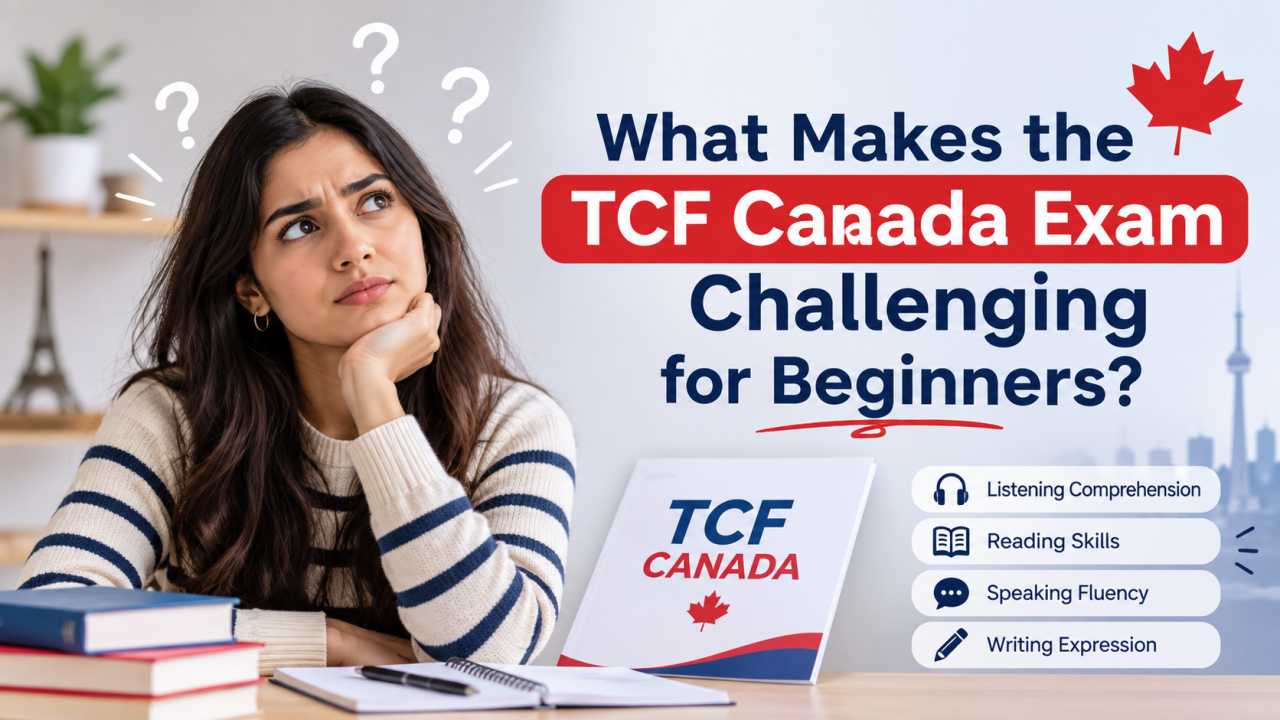
Introduction
TEF Canada is infamous for being tough, and that fear often does more damage than the exam itself. Thus, this blog from La Forêt breaks the myth down in a detailed manner. From scoring system to sections in the test, from rules of preparation to the don’ts of preparation, all is elaborated, and to end on a positive note, there is an FAQ section which clears all doubts that remain. Ready for TEF preparation? Read the entire blog right away.
Is the French Itself Actually Difficult?
What is the reason why French is considered a difficult language by most individuals? Is it due to the negativity attitude or is it because of a collective agreement? Something that can be associated with this is the attitude. When everybody around you says something, you will end up believing it. But what has been seen many times is that even fluent speakers face some difficulties in different parts as well, so there must be something else too. The test requires much more from the candidates besides fluency in French, and hence the gap.
-
The Difference Between Everyday French and Exam French
For this, take a second and think about how you use French on an average day. When ordering tea or gossiping with a friend, one might say “pardon?” when the other person talks too quickly. Nobody marks you, and the other person usually helps.
The exam works very differently. Every question has a set format, and the vocabulary goes well beyond daily talk. The speakers never slow down for you and the clock keeps ticking whether you understand or not. You might hear a long station announcement and have to pick one platform number from four options. That is a very different task from ordering a Pain au chocolat.
So being able to chat is definitely a good base, but it does not prove you are exam ready. Numerous fluent speakers find that out on test day.
What Actually Makes TCF Canada Difficult?
To name a few, grammar and vocabulary are two difficult aspects, yet the main trouble zones lie around them, and they hit beginners from several sides at once.
-
Four Mandatory Abilities Expose Uneven Profiles
As far as we know, TCF Canada tests listening, reading, writing, and speaking are the components that it involves; thus, there is nothing you can do to avoid any of these. It seems to be reasonable when looking at the candidates themselves. Some may be comfortable in one skill and shaky or lost in others. A strong reader can freeze when the examiner says, "Comment ça va?
Each skill gets its own result, so a weak one is displayed clearly on your marksheet. Your best skill will not rescue the others. Thus, give every skill regular time, even the ones you avoid, especially the ones you avoid.
-
Understanding Different Accents, Vocabulary, and Context
Each place has a different accent, which is why French sounds different from one place to another. A speaker from Paris, one from Quebec, and one from Dakar will each say the same word differently. And if we add unfamiliar vocabulary and long sentences, a beginner can lose the thread in seconds.
The usual reaction is to translate every word in your head. But trust us, it rarely works. By the time you finish one word, the speaker is three sentences ahead. Listen for the main idea instead, and let the context fill in what you miss. A word you don't know often explains itself later.
-
Communicating Clearly Under Exam Conditions
Listening and reading only ask you to understand. Whereas writing and speaking ask you to produce French on paper and out loud, and that is where nerves bite. You need clear ideas, decent grammar, a sensible order, and an answer that fits the question. All of it has to happen instantly.
Many beginners lean on memorized phrases to cope. A few help even. But a readymade speech often skips what the examiner asked, and it sounds rather stiff. You get further away by building your own sentences, even simple ones that are correct.
Which Sections of the TCF Canada Exam Are the Most Challenging?
TCF Canada has four definite or compulsory parts. Each one gives beginners a different kind of trouble, so it helps to look at them one by one.
1. Listening: 39 Questions in 35 Minutes
You get 39 questions in 35 minutes, and each recording plays only once. That is the real stress cause. If you miss the start of a sentence, you'll find that one of the answers is gone. Beginners also struggle to tell speakers apart and to catch names, numbers, and times, which tend to fly past.
The best habit is to keep moving. Once you miss a certain question, just move to the next one. Being too obsessed with one question may mean that you will miss the following three questions. How is this beneficial? You can listen to French radio or podcasts at various speeds every day, just ten minutes daily rather than one long Sunday session.
2. Reading: 39 Questions in 60 Minutes
The reading section has 39 questions and gives you 60 minutes. On paper that looks pleasant. In practice the passages are dense and lengthy, and beginners read slowly, so the minutes vanish into thin air. Hard words and twisty sentences slow you down more. Some questions ask what the writer means, not what the text says, and that needs a different kind of reading.
One thing to note is don't translate line by line. Read the gist of it first, then go back for details. If a question stumps you, make a quick guess and move on. Ten wasted minutes definitely hurt more than one wrong answer. Short articles, notices, and emails are good daily practice.
3. Writing: Three Different Tasks in 60 Minutes
Three tasks, 60 minutes. Each task has its own purpose, tone, and word count. Read the instructions closely, then write. Firstly plan, then write and check, all against the clock. Many beginners pour too much time into the first task and rush the last one. Don't do that.
Grammar, vocabulary, and sentence building all count, and so does the word count. Writing too little or too much can cost marks. Before each task, ask yourself what it really wants. A polite, formal message and a personal opinion need very different French.
4. Speaking: Three Tasks in 12 Minutes
The speaking test lasts about 12 minutes and has three tasks. Depending on the task, you may talk about yourself, ask questions, or defend a point of view. Each has to be in a different style, and there is hardly any time to think in depth.
Asking good questions in French is a skill of its own but so is giving an opinion and backing it up. Pronunciation, fluency, vocabulary, and grammar all feed into your result. Talking to an examiner makes it feel heavier, and a three-second pause can feel like an hour. Pauses are fine, though; you shouldn't worry. Practise out loud every day, even if it is only to yourself in the kitchen or in the mirror.
Common TCF Canada Mistakes Beginners Should Avoid
Mistakes can result from poor preparation or occur on the test day because of anxiety. Effective TCF Canada exam preparation begins with identifying the errors, and all of them have straightforward solutions. See our blog post about TCF Canada test preparation for more.
1. Ignoring Weak Sections During Preparation
It is a fact that we all practice what we enjoy. A confident reader keeps reading and quietly avoids speaking. Then test day arrives, and the gap is huge. Thus, find your weakest skill early and give it the biggest share of your week. Jot your progress in a notebook so you can see it improving. This is indeed a simple trick that almost everybody forgets.
2. Over-Reliance on Memorized Answers
Memorizing model answers by heart feels comfortable, but it will go wrong for you many times before it gets right. If the question changes a bit, and your perfect speech no longer fits with the response. Also, it sounds fake and unnatural. Instead, you have to learn the structure of a good answer: an opening, a reason, and a close. Then fill that frame with your own words. Your own words also carry your own voice.
3. Speaking Too Fast or Too Slowly
Nerves make some candidates race through their answers. Others stop and start, scared of every little mistake. Both reduce clarity.
- Aim for a steady, natural pace and take a short breath between ideas.
- Clear pronunciation matters as much as speed.
- Record yourself on your phone and play it back.
You will spot habits or errors you never knew you had.
4. Ignoring Grammar and Structure in Writing
Keep in mind that there is nothing wrong with short, concise sentences. On the contrary, faulty verb conjugations, missing accent marks, and poor word order in a sentence are not acceptable, as they will affect the clarity of your message. Grammar binds your thoughts into an organized whole. Make a brief outline, organize your paragraphs, and check for proper tenses, subject-verb agreement, and correct spelling.
5. Not Reviewing Practice Test Results
Answering test after test will not be sufficient on its own. The grade you receive tells you very little. Go over all of your incorrect answers and find out why you chose them. Is it because you didn’t have knowledge of the missing word, you read hastily, or you overlooked important details? Note down the pattern.
Frequently Asked Questions
Q1. Is the TCF Canada exam hard for beginners?
Yes, it can feel hard in the beginning, mostly because of the strict timing and four separate skills. Beginners usually know some French but have little exam practice. Steady study sessions filled with good guidance are the way to fill that gap. At La Forêt French Class, our TCF Canada coaching builds each skill step by step.
Q2. Which section of TCF Canada is the hardest?
For some, it could be listening or speaking, as these parts take place in real time. For others, it may be that writing errors of grammar can be seen in writing.
Q3. How long does a beginner need to prepare for TCF Canada?
There is no fixed answer to that because it depends on where you start and the score you need. Most beginners need several months of regular study but always note that daily practice beats long, rare sessions by a great margin.
Q4. Can I pass TCF Canada with only basic French?
Basic French alone rarely or almost never gets you there. You also need a wider and richer vocabulary, sharper listening and accurate writing, plus plenty of exam practice.







 Pay
 964 260 9000
 WhatsApp